Share On Social


Right-To-Repair Law Passes, Automakers File Federal Suit
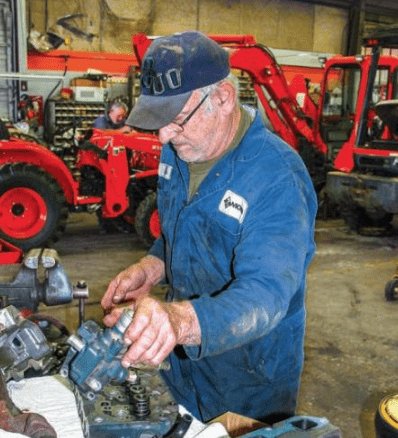
While the Right-to-Repair legislation that passed in Massachusetts during the November election targeted the automotive industry, the same principle now applies to all equipment-servicing facilities in the state. For example, when customers buy a piece of equipment (or car) they also buy complete access to the data streams that are generated during technical and diagnostic procedures as part of a service job. The new Massachusetts law—which passed with 75% approval from voters—requires manufacturers to equip vehicles with standardized open data software platforms by 2022.
The legislation also states that a standardized open data platform has to give vehicle owners and independent repair facilities direct access and the ability to retrieve mechanical data and run diagnostics through a mobile-based application.
Massachusetts voters had already passed landmark right-to-repair legislation in 2012 that required automakers to use a nonproprietary plug-in to access a machine’s onboard diagnostic port so third-party vendors could repair or service it, but that law had specifically exempted data that was transmitted wirelessly.
Automakers’ Response
Within weeks of the November election, automakers filed suit in a U.S. District Court in Massachusetts, primarily claiming that the law’s short timeline is impossible to meet when vehicle development cycles run three to five years.
Now, major automakers allege in a federal lawsuit filed after the election that the revised law poses cybersecurity and vehicle safety risks and the short timeline sets an “impossible task” for compliance.
The Alliance for Automotive Innovation — which represents General Motors, Ford, Toyota, Volkswagen and other automakers —filed the suit Nov. 20 in U.S. District Court for the District of Massachusetts, requesting that the court find the law “unenforceable because it is unconstitutional” and conflicts with federal laws.
Automakers are right to be concerned. Despite its relatively small size, Massachusetts’ requirement passed in 2012 requiring standard plug-ins to data ports was soon extended to cars nationwide, and the industry doesn’t want to see the same thing happen with data platforms.
On the face of it, the issue seems clear-cut: I bought it, I own it, and I need access to all hardware and software to repair it.
Manufacturers counter that consumers already have or can find all the information and equipment they need to handle all standard repairs and maintenance—but complete access that includes the ability to modify software settings poses serious safety, security and environmental risks.
OPEI’s Take On The Issue
According to the Outdoor Power Equipment Institute (OPEI), state legislation on the issue, in Massachusetts and in other states where similar laws have been proposed, is too broad and mixes the more acceptable right-to-repair with the unacceptable “right to modify.”
OPEI, as part of a coalition of suppliers, OEMs and groups including multiple dealer associations, has made its position clear in a statement of principles.
This includes a commitment from OPEI members to provide end users with increased resources by 2023 that include fleet management information, electronic field diagnostic tools and all related information and materials.
However, OPEI and its members draw the line at allowing third parties to alter or reset security features such as immobilizer systems, reprogram engine control units, change any settings related to emissions or safety compliance or access any embedded software or code.
Related Articles
Latest News
Subaru To Close Industrial Power Division
Fuji Heavy Industries is changing its name to Subaru Corp. The name change also comes with an operational shift. The company will focus all engineering and financial resources on the quickly growing automobile division. The…
General Transmissions Parts Distribution Network
General Transmissions launched a new North American regional parts distribution network. This will provide servicing dealers with a convenient source for continuously variable transmissions (CVT) parts for its products. Additionally, service technicians can access the…
PES Invests In Warehouse
Power Equipment Systems (PES), a Salem, Ore. family business that’s grown into one of the nation’s premier wholesale distributors of premium lawn and garden equipment, parts, and engines, has expanded into a renovated Willamette Valley…
Kawasaki Engines Executive Director
Kawasaki Engines Division named Nelson Wilner executive director. The appointment is effective immediately, and he will report to Rodger Howe, vice president. Wilner comes to the growing division after more than 20 years in the…
Winner Of Inaugural ‘America’s Main Streets’ Contest Announced
After an incredible display of support for Main Streets from coast to coast, Independent We Stand is pleased to recognize Downtown Lynden in Lynden, Wash., as the $25,000 winner of the “America’s Main Streets” contest.…
EDA Announces Award Recipients
The Equipment Dealers Association (EDA) recently completed the 2016 Dealer-Manufacturer Relations Survey Report and the award recipients have been selected. The Dealer’s Choice Award is presented to manufacturers that receive the highest ratings in 12…